Double-Blind Peer Review
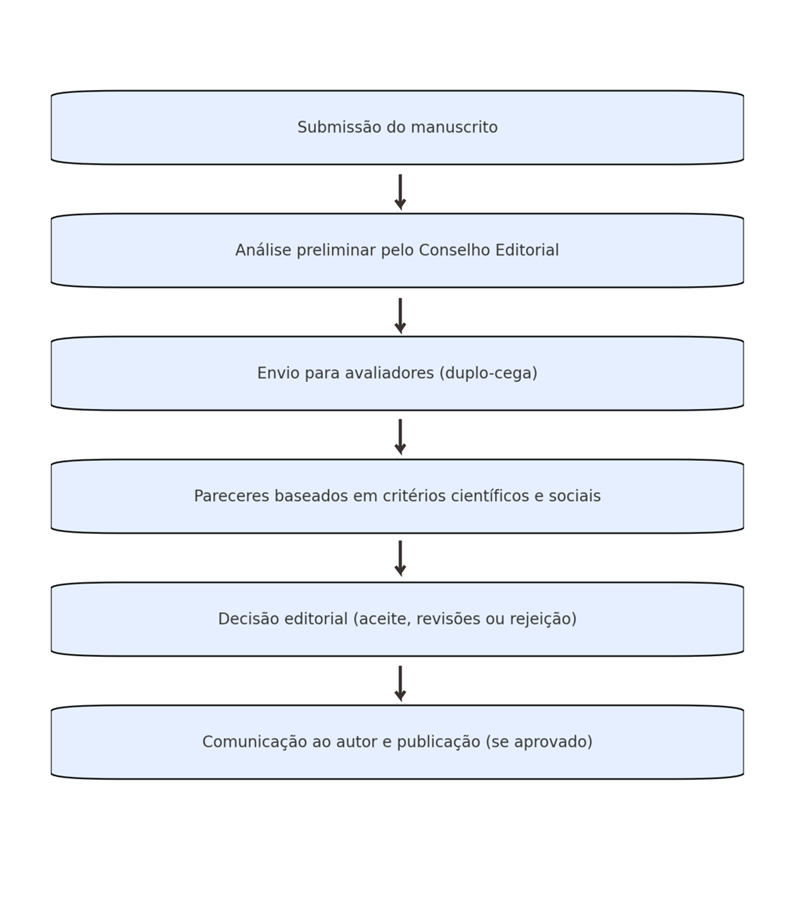
The EVOXIA – International Journal of Scientific Innovation adopts a double-blind peer review system, in which the identities of authors and reviewers remain confidential, ensuring impartiality, scientific quality and rigor, and transparency in the editorial process. Our goal is to strengthen scientifically based argumentation, encouraging multidisciplinary interaction in line with modern, innovative, and technological practices.
Evaluation Process
1. INITIAL SELECTION
All manuscripts are initially assessed by the Editorial Board, which verifies their compliance with the journal’s standards, alignment with the institutional mission, scientific relevance, and potential social impact. Papers outside the scope or that do not meet minimum quality standards are rejected at this stage.
2. ASSIGNMENT OF REVIEWERS
Approved manuscripts are forwarded to two expert reviewers, selected for their expertise in the subject and the absence of conflicts of interest. In cases of significant disagreement, a third reviewer may be consulted, and ad hoc experts may also be invited.
3. REVIEW CRITERIA
Reviews must consider:
· Originality and scientific innovation;
· Clarity of argumentation and proper use of empirical data;
· Methodological consistency and theoretical rigor;
· Contribution to the interaction between science and society;
· Global relevance and potential social and technological impact;
· Research ethics and respect for copyright.
4. EDITORIAL DECISIONS
Based on the opinions of the two expert reviewers, the co-editor may decide among:
· Under review
· Accepted;
· Accepted with minor revisions;
· Revise and resubmit;
· Rejected.
5. ETHICAL COMMITMENTS
The journal ensures:
- Guaranteeing the confidentiality of all stages.
- Ensuring that reviewers have no conflicts of interest regarding the authors or institutions involved.
· Absolute confidentiality of authors’ and reviewers’ identities;
· Reviews that are objective, constructive, and respectful;
· Use of technological tools for plagiarism detection and originality verification.
- Promoting a constructive, respectful evaluation that contributes to scientific improvement.